
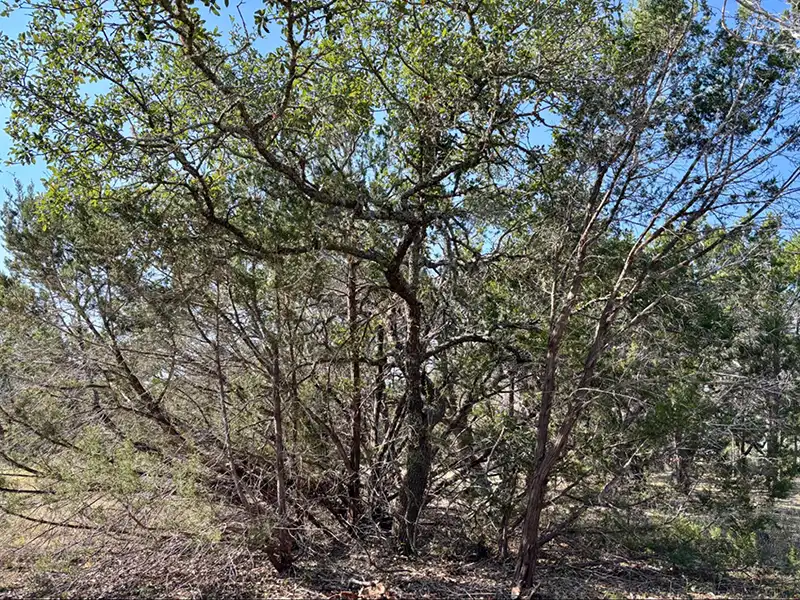
Cedar management involves selective thinning, removal, and clearing where appropriate, and it is one of the most common needs for new landowners. The native Ashe juniper (also referred to as a cedar tree) is an important species in our natural environment, contributing to soil retention and new soil production while also providing habitat and food for native wildlife, including the endangered Golden-cheeked warbler. However, when left unmanaged, the fast-growing Ashe juniper can quickly overrun large areas of forests and grasslands, outcompeting for available groundwater, soil nutrients, and light.
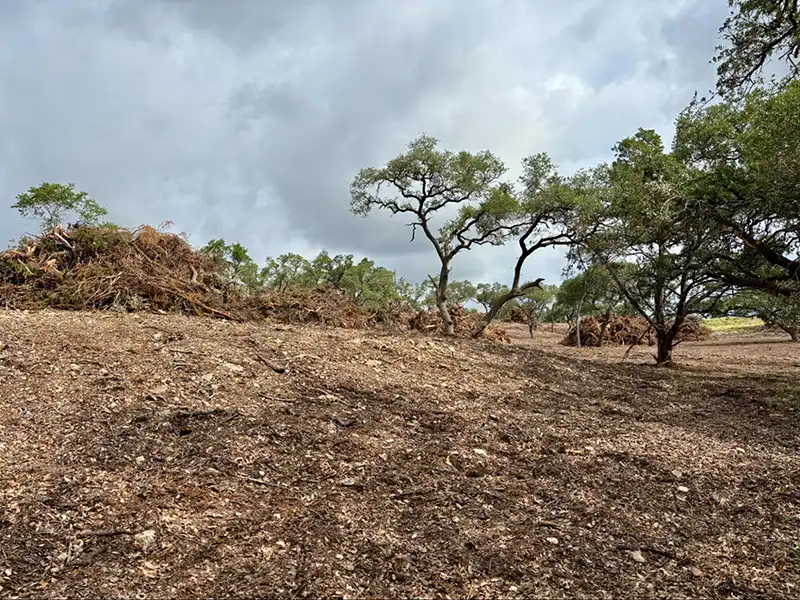
Land clearing is often selected when landowner goals involve development and/ or complete cedar removal (i.e., cedar clearing). Land clearing methods include the use of heavy equipment such as bull dozers and front loaders equipped with tree shredding attachments. While these are fast and efficient methods, the use of bull dozers, front loaders, and other heavy equipment have secondary longer-term effects that may not align with land conservation and preservation goals. Heavy equipment disrupts the natural ecosystem: destroying existing grasses and other ground cover, eviscerating the soil biosphere, damaging desirable hardwood trees, and compacting the soil. Soil compaction contributes to tree, grass, and ground cover decline, decreases water holding capacity, and increases runoff and erosion.
A Land restoration approach focuses on cedar management rather than eradication. Methods include strategic manual thinning, individual tree removals, and clearing where appropriate, along with mulching (chipping) rather than shredding. These methods keep ground cover intact, protect the soil biosphere, and avoid unnecessary soil compaction. Cedar thickets are thinned into open-air forests with increased light and water penetration while protecting against erosion and water runoff. Cedar management sets the conditions for the development of a healthy ecosystem of mixed hardwoods, understory trees, grasses and groundcover plants.
Every tree matters, and every client is part of our growing family. If you’re looking for unbeatable land restoration services that combine professional expertise with a personal touch, look no further.
Lightest Environmental Footprint
Restores Health and Biodiversity
Helps Mitigate Wildfire Spread and Intensity
Improves Land Usability
Family-Owned and Local Landowners
With three generations of hands-on land experience, we offer reliable service and honest advice. As local landowners in the Wimberley area, our customers are also our hill country neighbors.
1. On-Site Consultation and Land Walk
Every job begins with a detailed walkthrough. We assess your property’s vegetation, slope, hardwoods, and wildlife zones. Then we listen to your goals whether it’s fire mitigation, pasture restoration, or prepping for a build and design a plan that reflects your vision without compromising land integrity.
2. Selective Clearing with Specialized Equipment
Using low-impact forestry equipment, we manage cedar thickets, clear brush and remove hazardous deadfall, all while leaving behind intact native hardwoods and preserving vital root structures. This keeps your soil stable, encourages native growth, and maintains your land’s natural drainage and water retention systems.
3. Final Cleanup and Site Readiness
We perform a thorough cleanup to remove debris and prepare the area for its next phase whether it’s planting, fencing, or simply enjoying the view. We leave your property clean, walkable, and ready for whatever comes next.






We serve Hays County and surrounding areas in Texas. Our services are ideal for property owners who want responsible, precise, and professional land clearing that protects the land’s beauty and value. Let’s work together to manage your land the right way through restoration, not destruction. Learn more about us.
BLANCO
CANYON LAKE
DRIPPING SPRINGS
DRIFTWOOD
FISCHER
WIMBERLEY
Cedar tree management is the selective removal and thinning of Ashe juniper (commonly called cedar) to restore balance to the land. Proper management improves soil health, increases water availability, restores native grasses, and creates healthier wildlife habitats—without stripping the land bare.
Cedar trees spread aggressively in Central Texas and the Hill Country. Left unmanaged, they:
Thoughtful cedar management helps landowners protect their land for future generations while improving usability, beauty, and ecological health.
Cedar trees are not inherently bad, but overgrowth is harmful. When cedar populations grow unchecked, they outcompete native plants and disrupt the natural ecosystem. Our approach focuses on balance—not eradication—preserving beneficial trees while restoring the land’s natural rhythm.
Removing excess cedar allows rainfall to:
Landowners often notice new grass and groundcover growth and better water retention within one or two growing seasons.
When done improperly, yes.
When done correctly and selectively, cedar management actually reduces erosion by allowing native grasses to regrow. Grass root systems stabilize soil far better than dense cedar canopies that block sunlight and prevent ground cover.
Our cedar management process evaluates:
The result is healthier land, not stripped land.
Cedar management is not a one-time fix. Most properties benefit from:
This keeps cedar from reclaiming the land and ensures long-term success.