
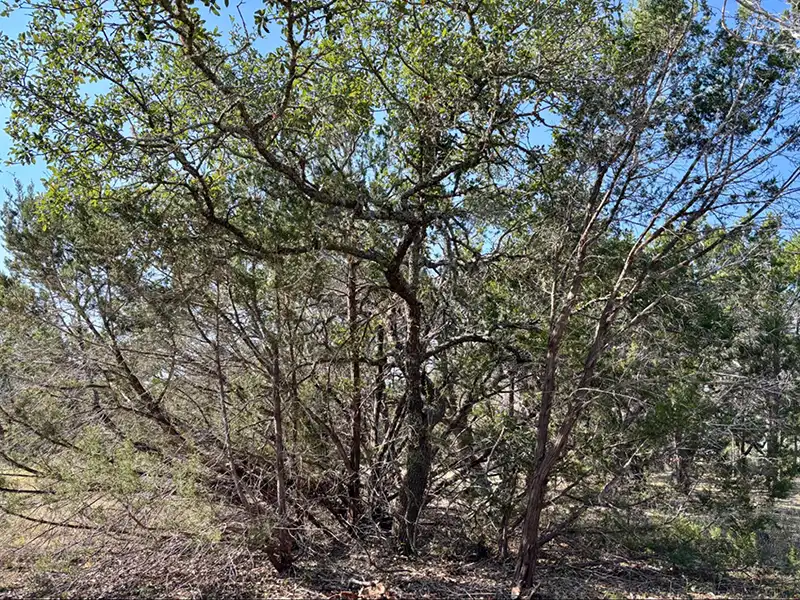
Forest rehabilitation resolves issues in overcrowded or stressed forested areas: reducing monocultural cedar thickets to allow for new growth, selectively removing cedars from within the drip lines of oak trees and other hardwoods, and cutting out tree-killing vines, deadwood and storm-damaged limbs. Biodiverse regrowth is encouraged through improved spacing, structure, light and water penetration. Forest rehabilitation supports healthier trees and ground cover, stronger soil systems, and improved wildlife habitat.
Our lightest-footprint methods avoid unnecessary soil compaction, grass and ground cover destruction, as well as tree limb and root damage. With precision and expertise built on decades of experience, we see the forest as a whole while also evaluating every tree’s contribution to the long-term health of the area’s environment.
Every tree matters, and every client is part of our growing family. If you’re looking for unbeatable land restoration services that combine professional expertise with a personal touch, look no further.
Lightest Environmental Footprint
Restores Health and Biodiversity
Helps Mitigate Wildfire Spread and Intensity
Improves Land Usability
Family-Owned and Local Landowners
With three generations of hands-on land experience, we offer reliable service and honest advice. As local landowners in the Wimberley area, our customers are also our hill country neighbors.
1. On-Site Consultation and Land Walk
Every job begins with a detailed walkthrough. We assess your property’s vegetation, slope, hardwoods, and wildlife zones. Then we listen to your goals whether it’s fire mitigation, pasture restoration, or prepping for a build and design a plan that reflects your vision without compromising land integrity.
2. Selective Clearing with Specialized Equipment
Using low-impact forestry equipment, we manage cedar thickets, clear brush and remove hazardous deadfall, all while leaving behind intact native hardwoods and preserving vital root structures. This keeps your soil stable, encourages native growth, and maintains your land’s natural drainage and water retention systems.
3. Final Cleanup and Site Readiness
We perform a thorough cleanup to remove debris and prepare the area for its next phase whether it’s planting, fencing, or simply enjoying the view. We leave your property clean, walkable, and ready for whatever comes next.






We serve Hays County and surrounding areas in Texas. Our services are ideal for property owners who want responsible, precise, and professional land clearing that protects the land’s beauty and value. Let’s work together to manage your land the right way through restoration, not destruction. Learn more about us.
BLANCO
CANYON LAKE
DRIPPING SPRINGS
DRIFTWOOD
FISCHER
WIMBERLEY
Forest rehabilitation is the process of restoring overgrown or stressed forested land to a healthier, more balanced state. Rather than removing everything, it focuses on selective management—reducing overcrowding, improving sunlight penetration, supporting native trees and plants, and strengthening the overall ecosystem.
Forest rehabilitation works with the existing forest instead of tearing it down. The goal is not to strip the land bare, but to improve forest health by selectively managing vegetation so native species, wildlife, and soil can thrive.
Many Hill Country forests become overcrowded with cedar and invasive brush, which limits sunlight, reduces water availability, and weakens native trees and grasses. Rehabilitation helps restore balance, improve water retention, and reduce wildfire risk.
By restoring native plant growth, increasing sunlight, and improving forest structure, rehabilitation creates better food sources, shelter, and movement corridors for native wildlife.
Every property is different. Forest rehabilitation is ideal for landowners who want healthier forests, improved biodiversity, better land access, and long-term sustainability without sacrificing the natural beauty of their land.